

Table of Contents
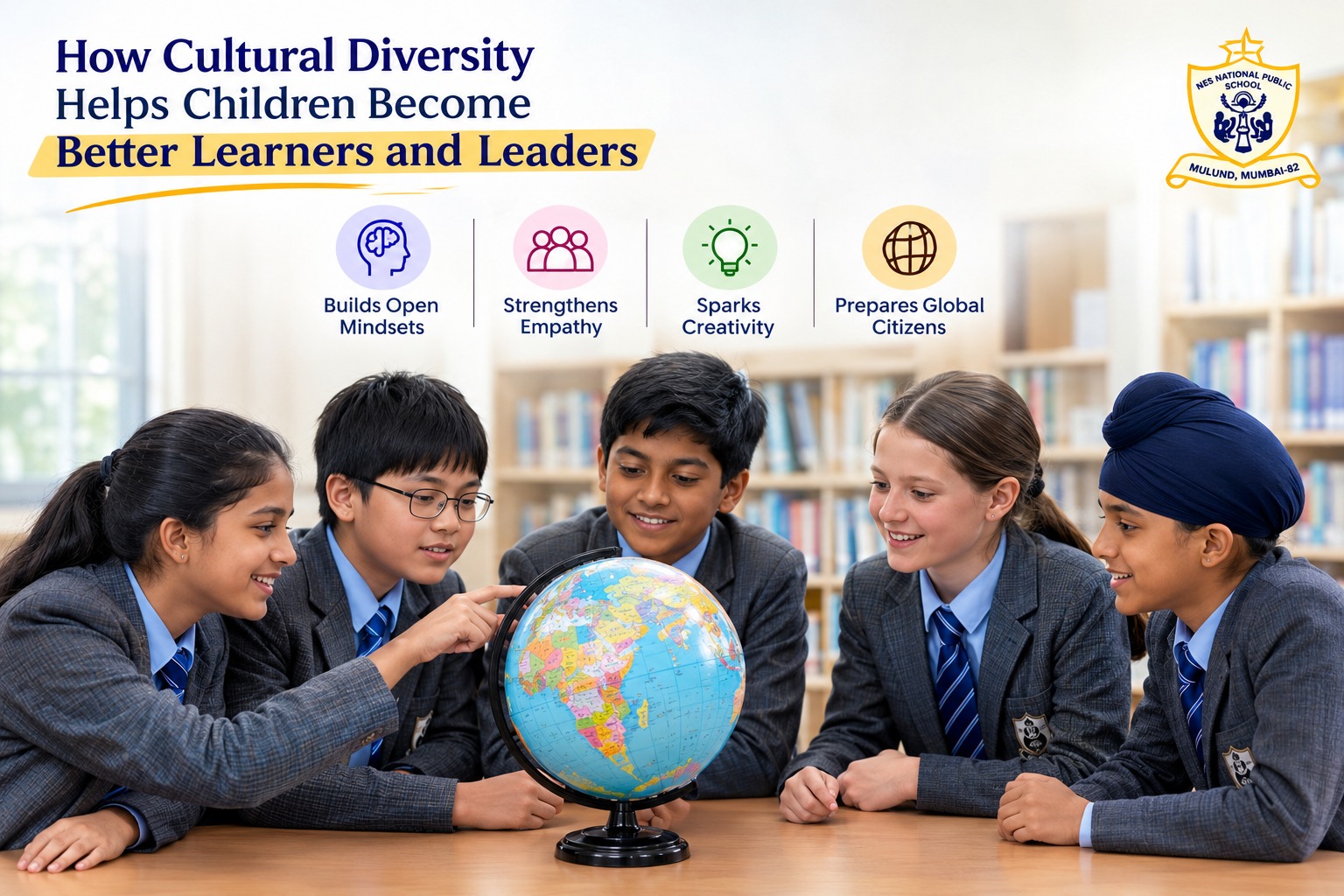
Every child grows up in a unique cultural environment shaped by traditions, languages, festivals, and values. When children learn alongside classmates from diverse backgrounds, they become more open-minded, respectful, and confident.
At NES National Public School , cultural diversity is not just respected—it is celebrated through everyday learning experiences.
What is Cultural Diversity?
Cultural diversity refers to the presence and appreciation of different traditions, languages, festivals, values, beliefs, and perspectives within a community. In a school environment, it gives children opportunities to learn from classmates with different cultural backgrounds and experiences.
How Does Cultural Diversity Benefit Children?
A culturally diverse school environment helps children:
- Understand and respect different traditions and perspectives.
- Develop empathy and inclusive behaviour.
- Communicate confidently with people from varied backgrounds.
- Work effectively in diverse groups.
- Approach ideas with greater openness and curiosity.
These experiences also strengthen essential skills such as collaboration, critical thinking, adaptability, and responsible decision-making.
How Does Diversity Prepare Future Leaders?
Leadership is built through everyday experiences. Working with classmates from different backgrounds teaches children to listen, cooperate, appreciate different viewpoints, and adapt to new situations. Over time, these experiences can help them become confident individuals who are comfortable navigating diverse communities.
How NES National Public School Promotes Cultural Diversity
At NES National Public School, diversity is woven into everyday learning rather than limited to special occasions. Students are encouraged to participate, collaborate, express their ideas, and appreciate the uniqueness of others.
By combining academic learning with values, cultural awareness, and meaningful interactions, the school creates an environment where children can grow into confident learners, compassionate individuals, and future-ready leaders.
Admissions for 2027–28 are now open. If you are looking for an ICSE school in Mulund that nurtures academic excellence, values, and global perspectives, visit NES National Public School.
Frequently Asked Questions
Why is cultural diversity important in schools?
Cultural diversity helps students understand different traditions, beliefs, and perspectives. It builds empathy, respect, communication skills, and prepares children to thrive in a global society.
How does cultural diversity improve learning?
A diverse learning environment encourages open-minded thinking, collaboration, creativity, and critical thinking. Students learn from each other's experiences, making education more meaningful.
How does the ICSE curriculum promote cultural diversity?
The ICSE curriculum supports holistic education through literature, collaborative learning, language development, arts, cultural activities, and value-based education that encourages respect for different cultures.
Why should parents choose an ICSE school that values cultural diversity?
An ICSE school that embraces cultural diversity helps children develop strong academic foundations while also building leadership, communication, empathy, adaptability, and global awareness skills that are essential for future success.